[the notes from the book were retrieved with kobogarden, with the purpose of aiding to create a map of the ideas the book left me. The full list of book highlights can be found here.]
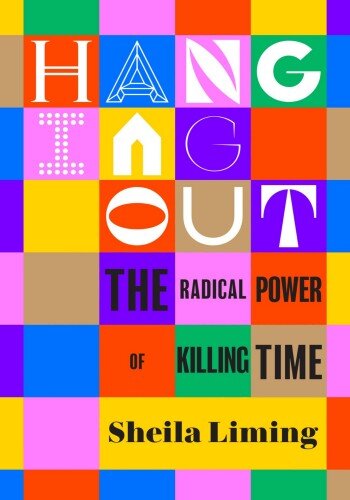
The author participated in Ezra Klein's podcast, and I recognized the obvious relationship between hanging out and a lineage of other topics and concerns whose presence has been steadily growing in this space. And as the best works of literature, it is in active dialogue with other people, works, and thoughts, subscribing to the idea of writing as a collective experience.
Hanging out is about daring to do nothing much and, even more than that, about daring to do it in the company of others. The concept of hanging out covers a broad spectrum of activities—some of them accidental and improvisational, some of them rather structured and planned (as in the kind of hanging out that happens at a formal gathering like a wedding, say). Regardless of the specific occasion, though, or of the amount of planning that has gone into creating it, the objective is the same: it’s about blocking out time and dedicating it to the work of interacting with other people, whoever they might be.
The structure of the book contextualizes the act of hanging out in many settings. Among others, there's hanging out at work, over the internet, at dinner parties, when solo travelling, and all these are powerful mechanisms to highlight how it can indeed play a founding role in many circumstances of modern life.
Liming is adamant on hanging out and its intimate (and contrasting) relationship to work, tracing direct connections to Odell's How to Do Nothing, that itself argued towards idleness. In the very strong chapter on hanging out at work (and the concept of work is generally a fundamental problem) there is a compelling argument connecting the shift from rural to urban settings to the consequence in loss of community.